Showing posts with label Photography. Show all posts

Sunday, September 4, 2011

Otok Paga - The Island of Pag

Under the watchful and overarching gaze of the Velebit Mountains, surrounded by the clear azure Adriatic Sea, is the island of Pag. It's barren and rocky landscape is dotted with remote towns and villages, stone churches, flocks upon flocks of sheep and pristine beaches. Paški Most (Pag Bridge), is a 300m long bridge which connects the island to mainland Dalmatia. Opened in 1968, it has made the island easily accessible to visitors and inhabitants alike.

Pag is the home of some of Croatia's best know products - the world renown Paški Sir (a sharp sheep's cheese from the island of Pag), Paška Morska Sol (A sea salt from the salt flats of Pag) and Paška Cipka (a fine lace produced by the women of Pag). My mother was born and spent the first few years of her life on Pag, making me pola paška - half paška (a person from Pag). So for me no trip to Croatia is complete without visiting a least a few of my countless cousins, and appreciating the culture and breathtaking landscape of this unique and interesting island.


A brief History of Pag

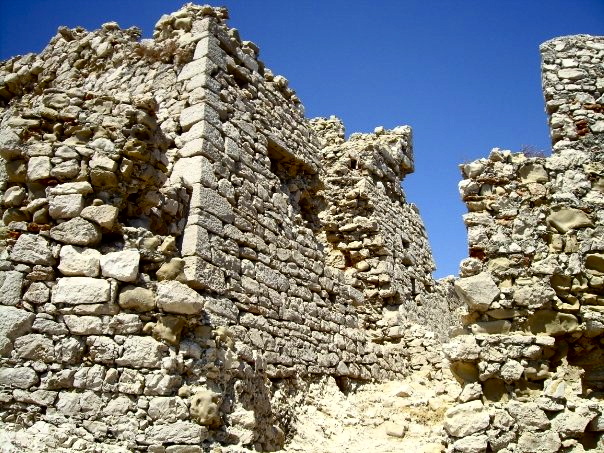
The island of Pag has a long and tumultuous history. It is believed that the island has been inhabited since the Stone Age, as tools and weapons from this period have been discovered off the shoreline of the island. During the Bronze Age, the Liburians, as well as several other Illyrian tribes (thought to have migrated from Ancient Greece), lived on the island until it was conquered by the Romans in 1BC. The ruins of a fort and necropolis in Mihovilje near Novalja, are all that is left of the Liburian rule. 


During the Roman rule of the island, three impressive basilicas were built in Caska, Novalja and Kosuljun, and many of its were fortified. In the 7th century Croats arrived on Pag. There were constant clashes between the Romans and Croats until the island fell to Venetian authorities at the end of the 18th century. During the Venetian rule of the island, the town of Pag was built in the 15th century. Juraj Dalmatinac, the great constructor and sculptor, participated in the urban planning of the new town.


When Napolean defeated the Republic of Venice the island fell under Austrian rule for seven years, followed by French control for the following ten. The island was once again under Austrian rule between 1815 and 1918, followed by a German-Italian occupation during the Second World War (like much of Dalmatia). During this time a concentration camp was set up on Pag by the Croatian Ustasha puppet regime. In 1945 the island, and the entire country, became part of communist Yugoslavia until its demise in 1991.




Tuesday, August 16, 2011

Croatia through the eyes of Lomography


I didn't leave Australia without my Diana Mini 35mm Lomography Camera (but little did I know that I'd have to wait until I returned to Australia before I could develop any of the film). I fell in love with lomography cameras since being introduced to them by a couple of my high school friends, who are also great lovers of art, travel and photography. I adore the other worldly and 'old-school' aesthetic of the photographic prints. They have a quality which evades and cannot be replicated by digital cameras, although the iPhone Hipstamatic App does attempt to challenge 'true' lomography. And although it's far from the real deal, it does give lomography a decent run for its money.

The act of photography is somehow more tactile, more exciting. There isn't that instant gratification we get from digital photography. In a world of instantaneous results, it's nice to take a step backwards, be patient, relax, enjoy the moment and not get caught up in it all. Thinking about it, life in Dalmatia has many similarities to lomography...

So I was the weird Australika (Australian girl) in Tisno taking photographs with this little blue and black plastic camera, which is about the size of a small box of jelly belly jelly beans. And here are some of my results.


Thursday, July 21, 2011

Snow? In Tisno?

View towards the selo (the town centre)
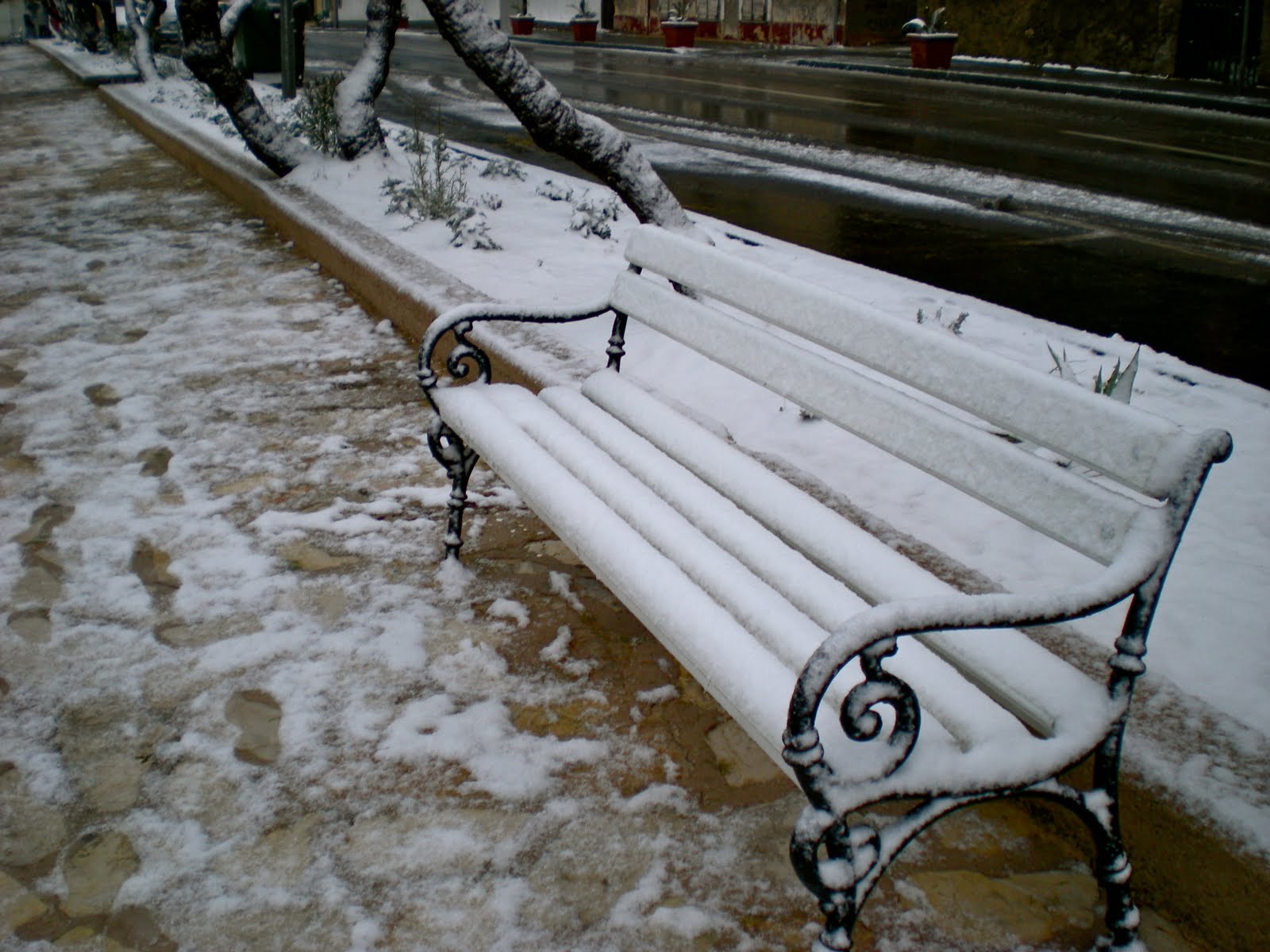
Snow! There's something magical about it, the way it falls from those foreboding grey clouds and covers the landscape in a pure white blanket, instantly altering our perception of it. Is this awe an innate human reaction, or is it a learned reaction due to growing-up watching films such as Little Women and Home Alone where a snowy landscape equates to warmth, family, fun, adventure? Or is it that I've only experienced snow a handful of times, so it remains something unusual, interesting, amazing? Whatever it is, I'm always excited to see snow. I remember living in Paris, sitting on the lounge beneath the large Hausmann styled window in the sitting room. I glanced outside, and thought, 'Is that rain? Or is that snow?' Taking a closer look I perceived it to be snow. I dropped the book I was reading, put on my ugg boots and run outside to stand amongst the floating snowflakes. I must have appeared a little odd to some passers-by, but I was so enthralled by the snow. So when I experienced a snow fall in Tisno, again I found it difficult the contain my excitement. Even more so, since I had become accustomed to visiting Tisno during the summer. So seeing the town in its winter guise was strange enough, let alone seeing it during and after a snow fall.

Gomilica
Being situated on the coast, winters in Tisno are usually quite mild (during this winter we even had sunny days, with the temperature reaching almost twenty degrees Celsius) with temperatures averaging around ten degrees and I think the coldest day we had whilst I was there was about zero degrees. Compared to inland regions who were experiencing minus twenty degree weather, I consider zero to ten degrees to be reasonably mild. And it's not every year that snow falls in Tisno, so I felt especially lucky to be there this particular winter.


Kampaneja (the bell tower)
I think we (I had began dating one of the local boys by this stage) may have been sitting in Kole's cafe (where else would we be between the hours of 11am and 2pm - I need my daily does of cocoa, newspapers, town gossip, Mr. Steve's opinions, Dijana's happy smile), or someone gave us a call, I can't remember exactly, but anyway we heard that it was snowing in Dazlina (about 10km away). So, having nothing better to do (there is hardly any work during winter in Dalmatia, so we never really had anything better to do), and also being somewhat excited, we jumped into the car and drove to Dazlina to see snow, thinking that this would probably be the only chance we'd get that winter. As we passed the Magistral (the main coastal road in Croatia, running from Istra in the north to Dubrovnik in the south) at Kapela (the intersection of the Magistral and the road that leads to Tisno), we could see the dark clouds eerily hanging over the distant landscape. As we drove through Dubrava and neared Dazlina we saw that the small hamlet was quickly being covered in snow. Within moments, that snow began falling all around the car and the once dry, rocky landscape was soon completely disguised by a powdery white blanket.

Snow in Dazlina
We drove painfully slowly back to Tisno, as the road was extremely slippery. It continued to snow the entire way and, to our amazement, it was also snowing in Tisno! How beautiful moje malo misto (my little town) looked in the cool afternoon light with its snowcapped roofs and powderwhite footpaths. So still, yet somehow so animated. To me it appear to be much more beautiful than on a warm and sunny summer's day. It posessed a magical, other-worldly atmosphere, unable to be properly felt though these photographs. It was one of those 'you had to be there' moments.

The path to Karavaj

We also walked up to Karavaj (the southern hill on the island side of the town, where the Church of the Madonna of Carravaggio is located) in the snow. Even though the dusk was drawing near, I wasn't going to miss this perhaps once in a lifetime experience - I was going to enjoy it to the full. Walking up the hill wasn't the easiest of things, as my boots constantly fell through the fresh snow. I'd say that there was a good half foot of it. But the view towards the selo, Gomilica (the mainland side of the town) and the islands of Ljutac, Borovnik, Bisaga and Mimonjak (to the south of Tisno) was truely amazing.

I'm sure that most Tisnjani and visitors to Tisno would agree with me in thinking that Tisno is absolutely beautiful during the summer months. But am I wrong in believing that its winter landscape is beyond any description of beauty...?

The Church of the Madonna of Caravaggio

Final few photos captured just before evening fell
The view from Karavaj onto Tisno